However, before travelling to Germany for employment, you must understand the Germany Work Permit Visa 2026 requirements. Getting a job offer is an important step, but it does not automatically give you permission to work. You must also qualify for the appropriate visa or residence permit and follow the official immigration process.
The good news is that Germany offers several immigration routes for qualified foreign workers. Depending on your education, professional experience, language skills, and employment plans, you may qualify for a skilled worker visa, an EU Blue Card, an Opportunity Card, or another employment-related route.
This guide explains the main Germany work visa options, eligibility requirements, necessary documents, application procedures, expected costs, salary considerations, and job-search tips. Whether you are a skilled professional, a technical worker, or someone planning to enter Germany through vocational training, this article will help you understand your options.
What Is a Germany Work Permit Visa?
A Germany work permit visa is a common term used for the immigration permission that allows eligible foreign nationals to live and work legally in Germany.
For many non-EU citizens, the process begins with applying for a national visa for employment. After arriving in Germany, the worker may need to obtain the appropriate residence permit from the local immigration authority.
The exact procedure depends on the visa category and the applicant’s situation.
For example, a qualified engineer with a German job offer may qualify for a skilled worker residence permit or an EU Blue Card. A person who wants to search for employment may be eligible for the Opportunity Card instead.
Citizens of the European Union generally have different rights to work in Germany. Non-EU nationals, including most applicants from Bangladesh, normally need to meet specific immigration requirements before beginning employment.
It is also important to understand that a tourist visa does not normally authorize regular employment. If you want to work in Germany, you should follow the correct employment immigration route.
Why Choose Germany for Work in 2026?
Germany offers a wide range of employment opportunities, but the benefits depend on your occupation, qualifications, location, and personal circumstances.
1. Opportunities in Different Industries
Germany has a large economy with employers in manufacturing, healthcare, engineering, construction, transportation, technology, and other sectors.
Qualified international workers may find opportunities in these industries if they meet the employer’s requirements and the relevant immigration rules.
2. Competitive Salary Opportunities
German salaries vary by occupation, experience, region, and employer. Highly qualified professionals may earn more than workers in entry-level positions.
Before accepting a job, compare the gross salary with taxes, social insurance contributions, housing costs, transportation, and other living expenses.
3. Employment Protection
Germany has employment laws covering matters such as working hours, workplace safety, paid leave, and minimum wages.
Eligible workers may also participate in the country’s social insurance system, depending on their employment and residence status.
4. Career Development
Working in Germany can help you gain international experience, improve your technical skills, and develop your German language ability.
These skills may be valuable if you want to continue your career in Germany or pursue other professional opportunities later.
5. Different Immigration Routes
Germany does not require every foreign worker to follow the same visa process. There are different routes for qualified professionals, experienced workers, certain vocational trainees, and eligible job seekers.
Choosing the correct category can help you avoid unnecessary delays and prepare the right documents.
Types of Germany Work Permit Visa in 2026
Before applying, identify the immigration route that matches your qualifications and employment goals.
1. Germany Skilled Worker Visa
The skilled worker visa is intended for eligible foreign nationals with recognized vocational qualifications or qualifying academic degrees who want to work in Germany.
Applicants generally need an appropriate job offer and must satisfy the requirements of the relevant residence permit category.
Possible occupations include:
-
Qualified nurses and healthcare professionals
-
Engineers and technicians
-
Electricians and other skilled tradespeople
-
IT specialists
-
Manufacturing professionals
-
Certain hospitality and technical workers
The requirements vary by occupation. For regulated professions, such as nursing, applicants may need formal recognition of their qualifications and professional authorization before they can practise.
2. EU Blue Card Germany
The EU Blue Card is a residence permit for eligible highly qualified professionals who have a qualifying job offer in Germany.
It is commonly associated with jobs in technology, engineering, mathematics, science, and healthcare, although other eligible occupations may also qualify.
Applicants generally need a qualifying academic qualification or, under certain conditions, an eligible equivalent qualification. The job and salary must meet the applicable requirements.
Germany sets specific salary thresholds for the EU Blue Card and updates them periodically. Applicants should check the official 2026 thresholds before submitting an application.
For example, a software developer with a suitable degree and a qualifying job offer may be eligible for the EU Blue Card if all relevant conditions are met.
The Blue Card may also offer certain advantages regarding family reunification and access to permanent residence, subject to the applicable rules.
3. Germany Opportunity Card
The Opportunity Card, known in German as the Chancenkarte, provides an immigration route for eligible non-EU nationals who want to search for employment in Germany.
Depending on their circumstances, applicants may qualify through a recognized skilled-worker route or a points-based system.
The points-based route considers factors such as qualifications, professional experience, language skills, age, and connections to Germany. Applicants must also meet the applicable financial and other requirements.
The Opportunity Card can allow limited employment while the holder searches for a suitable job. However, it does not provide an unrestricted right to take any full-time job immediately.
After finding suitable employment, the holder may need to apply for an appropriate residence permit.
4. Germany Visa for Experienced Workers
Germany also has immigration routes for certain experienced workers in eligible occupations.
Depending on the route, applicants may need to demonstrate professional experience, suitable qualifications, a job offer, and compliance with salary or other employment conditions.
Some routes allow eligible workers in non-regulated occupations to qualify without following the same formal qualification recognition process required for other skilled-worker categories.
However, work experience alone is not enough. Applicants must meet the precise conditions of the category they choose.
5. Germany Vocational Training Visa
Germany’s vocational training system, known as Ausbildung, combines practical workplace experience with classroom education.
Eligible foreign nationals may apply for a visa to undertake qualifying vocational training in Germany.
Popular training areas include healthcare, hospitality, technical occupations, manufacturing, and skilled trades.
Applicants generally need an appropriate training place and must meet the applicable language, financial, and immigration requirements.
German language ability is especially important because trainees need to understand instructions, communicate with colleagues, and complete their training successfully.
6. Germany Work Visa for IT Specialists
Certain IT professionals may qualify for employment routes with specific rules relating to professional experience and qualifications.
Depending on the applicable category, an eligible IT specialist may be able to qualify without a traditional university degree.
However, applicants must still meet the relevant requirements regarding experience, employment, salary, and other conditions.
If you work in software development, cybersecurity, cloud computing, or another technology field, compare the available routes before deciding which one to pursue.
Germany Work Permit Visa Requirements for Bangladeshi Citizens
Bangladeshi citizens who want to work in Germany generally need to obtain the appropriate visa before travelling. The exact requirements depend on the type of employment and the residence permit category.
Valid Passport
Your passport must meet the German visa requirements. Check its validity and ensure that the personal details match your application and supporting documents.
Relevant Qualifications
For a skilled worker visa, you generally need a qualifying vocational or academic qualification that is recognized or comparable under the applicable German rules.
You can research foreign qualification recognition through the official information portal, Make it in Germany, and the relevant German recognition authorities.
A Suitable Job Offer
Most standard skilled-worker routes require a specific job offer from a German employer. The position must meet the requirements of the relevant residence permit category.
For some routes, the job does not have to be directly related to your university degree, but regulated professions have additional requirements.
Language Skills
German language ability can make it easier to find employment and manage daily life. Some occupations, especially healthcare and vocational training, may require a particular German-language level.
For the Opportunity Card points-based route, applicants generally need at least German A1 or English B2, alongside the other eligibility conditions. Different rules apply to applicants who qualify through the recognized-skilled-worker route.

Financial Proof
Some visa categories require evidence that you can support yourself during your stay.
For the Opportunity Card, the official 2026 guidance lists €1,091 net per month as the standard blocked-account amount. Depending on your circumstances, another accepted form of financial proof may be available.
Documents Required for Germany Work Permit Visa 2026
Prepare your documents according to the official checklist for your visa category. Commonly requested documents may include:
-
Valid passport
-
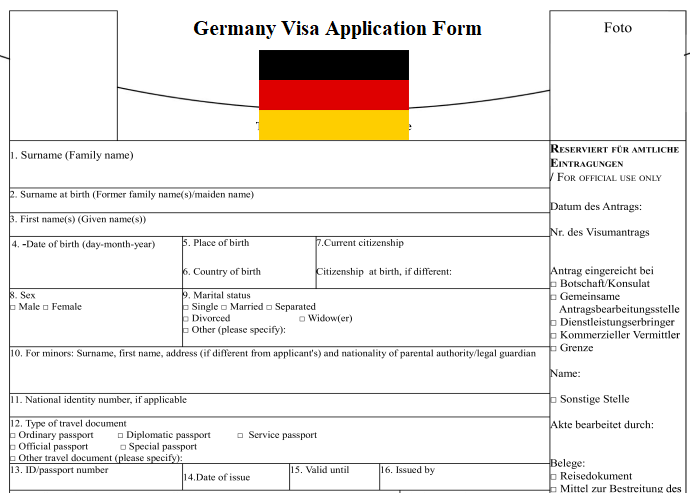
Completed national visa application form
-
Recent biometric photographs
-
Job offer or employment contract, where required
-
Educational certificates and transcripts
-
Vocational training certificates, if applicable
-
Qualification recognition or comparability documents, where required
-
CV or résumé
-
Employment reference letters
-
Language certificates, if applicable
-
Proof of financial resources, when required
-
Health insurance evidence, where applicable
-
Visa fee payment
-
Additional documents requested by the German embassy
Documents issued in another language may need certified translations. Certain certificates may also require verification or legalization.
If you are applying from Bangladesh, follow the current instructions from the German Embassy in Dhaka. The embassy’s official website provides visa information and category-specific checklists.
Do not rely on a document checklist from an unofficial social media page. Even if another applicant used certain documents successfully, your situation may require additional evidence.
How to Apply for Germany Work Permit Visa 2026
The application process depends on the route you choose. However, the following steps provide a useful starting point.
Step 1: Choose the Correct Visa Category
First, identify the route that matches your qualifications and plans.
If you have a recognized qualification and a suitable job offer, explore the skilled worker visa or EU Blue Card. If you want to search for employment after entering Germany, check whether you qualify for the Opportunity Card.
Step 2: Find a Genuine German Employer
Search for vacancies that match your experience and qualifications.
Useful websites include:
-
Make it in Germany: make-it-in-germany.com
-
Federal Employment Agency: arbeitsagentur.de
-
EURES: europa.eu/eures
-
LinkedIn: linkedin.com
-
Official German company career websites
Read the job description carefully. Check whether the employer accepts applicants from outside the EU and whether the position qualifies for the immigration route you intend to use.
Step 3: Prepare Your CV and Certificates
Create a professional CV that explains your education, work history, skills, language ability, and relevant achievements.
Keep your educational certificates, employment letters, and professional documents organized. If recognition is required, begin researching the process early because it may take time.
Step 4: Receive a Suitable Job Offer
If an employer selects you, review the employment contract before accepting it.
Pay attention to salary, working hours, job responsibilities, probation period, leave, work location, and any relocation support.
A genuine job offer should clearly identify the employer and the terms of employment. Do not pay an unknown person who promises to arrange a guaranteed job or visa.
Step 5: Submit Your Visa Application
Follow the instructions of the German mission responsible for your place of residence.
Depending on the visa category, you may be able to start through the Federal Foreign Office’s Consular Services Portal. Other categories may use specific online appointment and document submission procedures.
Provide accurate information and ensure that your documents match the details in your application.
Step 6: Attend the Appointment
You may need to attend an appointment for document submission, biometric collection, or an interview.
Be prepared to explain your employment plans, qualifications, financial arrangements, and reasons for choosing Germany.
Answer honestly and provide additional evidence if requested.
Step 7: Wait for the Decision
Processing times depend on the visa category, document verification, appointment availability, and individual circumstances.
Do not assume that approval is guaranteed simply because you have a job offer. Avoid purchasing nonrefundable tickets before your visa is approved.
Step 8: Travel and Complete the Required Formalities
After approval, check the visa’s validity and employment conditions before travelling.
Depending on your situation, you may need to register your address, arrange appropriate health insurance, and apply for or collect a residence permit after arrival.
Always follow the instructions provided by the German authorities.
Germany Work Permit Visa Cost in 2026
The total cost of a Germany work permit visa depends on your visa category, documentation, travel arrangements, and personal circumstances.
For applicants in Bangladesh, the German Embassy’s published fee schedule lists the national visa fee for adults as €75, payable in Bangladeshi taka at the applicable exchange rate. The fee is generally nonrefundable, even if the application is rejected.
Other possible expenses include:
-
Passport issuance or renewal
-
Certified document translations
-
Qualification recognition
-
Language examinations
-
Document verification, where required
-
Travel to the visa appointment
-
Health insurance
-
Flight tickets
-
Initial accommodation in Germany
-
Residence permit-related charges
Not every applicant will need to pay all these expenses. Some employers provide relocation assistance, while other costs remain the applicant’s responsibility.
If you are applying through the Opportunity Card, you must also demonstrate that you can support yourself financially. The required amount should be checked against the official 2026 guidance before you arrange a blocked account.
Always confirm the latest fees with the German Embassy and avoid paying unofficial agents who claim they can guarantee visa approval.
Germany Work Visa Processing Time
There is no single processing time for every German work visa application.
The timeline depends on your visa category, appointment availability, document checks, qualification recognition, and the workload of the relevant authorities.
Some applications may be processed within several weeks, while others take longer. Cases involving professional recognition or additional verification can require extra time.
To avoid unnecessary delays, prepare your documents carefully and submit a complete application. If your profession requires recognition, start that process early.
Applicants should also remember that finding a job, obtaining the required documents, and securing an appointment can take additional time before the visa application is completed.
Germany Work 2026: Salary and Job Opportunities
Germany has employment opportunities across several industries. However, salaries vary according to experience, qualifications, location, and employer.
Healthcare and Nursing
Hospitals, care facilities, and other healthcare organizations employ qualified nurses and healthcare professionals.
Applicants may need recognition of their qualifications, professional authorization, and German-language skills. Check the relevant licensing requirements before applying.
Information Technology
Software developers, cybersecurity specialists, cloud engineers, and other IT professionals may find opportunities with German employers.
Some IT employment routes have specific rules for experienced applicants without a traditional university degree. Eligibility depends on the applicable requirements.
Engineering and Manufacturing
Germany has a large industrial sector, creating opportunities for certain mechanical engineers, electrical engineers, technicians, and manufacturing specialists.
Applicants should search for positions that match their training and experience.
Construction and Skilled Trades
Qualified electricians, plumbers, technicians, and other tradespeople may find employment opportunities.
Some occupations require formal recognition, professional authorization, or specific safety qualifications.
Logistics and Warehousing
Germany’s transport and distribution industries employ logistics specialists, warehouse workers, and certain drivers.
However, not every entry-level vacancy qualifies for a skilled-worker visa. Confirm that the job meets the requirements of the relevant immigration category.
Hospitality and Tourism
Hotels, restaurants, and tourism businesses employ workers in various roles. German-language skills may be especially helpful in customer-facing positions.
Before accepting a job, check the salary, contract, working hours, and visa eligibility.
Tips for Finding Germany Visa Sponsorship Jobs
Finding a legitimate employer is one of the most important parts of the Germany work permit process.
First, prepare a professional CV that highlights your qualifications and relevant experience. Use a clear format and tailor your application to the job.
Second, search on reliable job websites and official company career pages. You can use terms such as “Germany visa sponsorship jobs 2026,” “Germany skilled worker jobs,” or “Germany IT jobs for foreigners” to find relevant vacancies.
Third, improve your German language skills. Even when an employer uses English, German can help you communicate with colleagues, manage daily tasks, and expand your employment options.
Fourth, check whether your qualifications need formal recognition. This is particularly important for regulated professions such as nursing.
Finally, verify the employer before sending money or personal documents. A genuine employer should provide clear information about the job and the required immigration process.
Common Mistakes to Avoid When Applying
Many applicants experience delays because they choose the wrong visa category or submit incomplete documents.
Avoid these common mistakes:
-
Applying without checking the eligibility requirements
-
Using false educational or employment documents
-
Assuming that every job offer qualifies for a work visa
-
Ignoring professional recognition requirements
-
Providing inconsistent information across documents
-
Paying large sums to unverified recruitment agents
-
Travelling on a tourist visa with the intention of working illegally
-
Making travel arrangements before visa approval
Careful preparation can help you avoid unnecessary expenses and improve the quality of your application.
Frequently Asked Questions (FAQ)
1. Can Bangladeshi citizens apply for a Germany Work Permit Visa in 2026?
Yes. Bangladeshi citizens can apply for eligible German employment visa categories if they meet the relevant requirements. Depending on their qualifications and circumstances, they may consider a skilled worker visa, EU Blue Card, Opportunity Card, or vocational training route.
2. How much does a Germany Work Permit Visa cost in 2026?
The standard national visa fee for adults applying through the German Embassy in Bangladesh is €75, payable in Bangladeshi taka at the applicable exchange rate. Additional expenses may include translations, qualification recognition, travel, insurance, and accommodation. Always check the official fee schedule before applying.
3. Can I get a Germany work visa without a job offer?
In certain circumstances, yes. The Opportunity Card allows eligible applicants to enter Germany to search for employment without having a job offer in advance. However, applicants must meet the qualification, language, financial, and other requirements. Most standard skilled-worker employment routes require a suitable job offer.
4. Is IELTS required for a Germany work visa?
IELTS is not a universal requirement for every German work visa. Some visa categories and employers require evidence of English or German proficiency, while others have different conditions. The Opportunity Card points-based route generally requires German A1 or English B2. Check the requirements for your specific category.
5. Can I bring my family to Germany on a work visa?
Eligible workers may be able to bring their spouse and children through the applicable family reunification procedure. Requirements depend on the residence permit, family relationship, housing, financial circumstances, and other relevant rules. Certain residence categories may provide more favourable conditions, so check the rules for your specific permit.
Conclusion
The Germany Work Permit Visa 2026 process offers several opportunities for eligible foreign nationals who want to build a career in Germany. Depending on your qualifications and goals, you may qualify for a skilled worker visa, EU Blue Card, Opportunity Card, vocational training route, or another employment-related residence permit.
The most important step is to identify the correct visa category before applying. Prepare your documents, research qualification recognition, improve your language skills, and search for genuine employers through reliable job platforms.
If you are applying from Bangladesh, follow the official German Embassy instructions and confirm the latest fees and appointment procedures. Avoid anyone who promises guaranteed employment or visa approval in exchange for large payments.
Remember that a job offer alone does not automatically give you permission to work. You must meet the immigration requirements and obtain the appropriate authorization.
With realistic planning, accurate documentation, and a legitimate employment opportunity, you can take meaningful steps toward working legally in Germany in 2026 and building a stronger professional future.